Let me tell you about the conversation I’ve had over and over with pastors and planters who are trying to figure out why their church resists change in the first place.
It usually starts with something like: “We know we need to change, but our people are pushing back hard.”
Sound familiar? You’re dealing with resistance to necessary change, and honestly—it’s draining.
Here’s the truth about church change: it’s not just difficult… It’s a whole different kind of difficult. If you’re leading a church that needs to shift direction, you’re about to see why resistance might be the toughest battle you fight in ministry.
The Vision is Clear. The Resistance is Real.
You’ve done your homework. Prayer has been part of the process. The data backs you up, and the future of your church depends on making this shift. The vision couldn’t be clearer.
But then the resistance starts:
- “We’ve always done it this way”
- “The previous pastor tried that – it didn’t work”
- “People will leave if we change this”
- “My family helped start that ministry”
What started as a clear vision is now getting cloudy with every conversation. Long-time volunteers are threatening to leave, and suddenly, that necessary change feels impossible.
Why Church Change is Different
Look, change is hard everywhere. Church change, though? That’s a whole different level.
You’re not just changing programs – you’re touching memories. Updating systems means challenging traditions, and making business decisions requires asking people to let go of things they consider sacred.
When you propose changes at church, you’re not just dealing with preferences. Here’s what you’re really facing:
- Emotional attachments that run generations deep
- The implication that past methods weren’t perfect
- Sacred cows nobody wants to admit exist
- Fear masquerading as spirituality
Here’s what makes it even trickier – the people who built your church’s present often struggle to imagine a different future.
The Tension Every Leader Faces
As a leader, you’re caught in an impossible tension. What needs to change is clear to you. The mission demands it, the community requires it, and the next generation needs it.
But the people you love, the ones who have been faithful for years, the volunteers who make everything work – they’re not seeing it. Their resistance isn’t malicious; it’s human.
So what do you do?
Moving Forward Without Blowing Up
Here’s what I’ve learned (sometimes the hard way):
1. Trust Has to Come First
You can’t lead change faster than you’ve built trust. Period. If people don’t trust you yet, slow down and build those relationships. Listen before you lead, and show respect for the history you’re about to disrupt.
The speed of change should never exceed the speed of trust.
2. Start Small and Stack Wins
Don’t try to change everything at once. Pick one thing, make it work, and celebrate it before moving to the next thing. Small victories build momentum, while big proclamations build resistance.
3. Honor the Past While Moving to the Future
People need to know you value what came before. Acknowledge it, celebrate it, and honor the people who built it – then help them see how the future builds on that foundation rather than demolishing it.
4. People Aren’t Afraid of Change – They’re Afraid of Loss
When someone resists your change, they’re not being difficult. They’re protecting something they value, so find out what they think they’re losing and address that fear directly. Sometimes the most resistant people just need reassurance that what they care about still matters.
When to Push and When to Wait
Here’s the reality check nobody wants to hear: not every hill is worth dying on.
Some changes are essential to your church’s survival. Others are just your preferences in disguise, and wisdom knows the difference.
Ask yourself:
- Is this change mission-critical or preference-driven?
- Am I rushing because I’m impatient or because timing is crucial?
- Have I built enough trust to lead this change?
- Am I willing to pay the cost if people leave over this?
The Long Game
Leading change in the church isn’t a sprint – it’s a marathon with obstacles. Sometimes it feels like you’re pushing a boulder uphill while people throw rocks at you.
But here’s what I know after years of doing this: if nothing changes, nothing changes.
Your church’s mission is too important to let fear of resistance keep you from necessary change. Yes, it’s hard. It’s messy, and some people might leave.
But the alternative – slowly dying because you were too afraid to adapt – is worse.
The Bottom Line
Change in the church is complicated because the church is complicated. You’re dealing with people’s faith, their families, their history, and their hope for the future – sacred ground that demands careful, thoughtful leadership.
Just because it’s difficult doesn’t mean it’s optional.
Lead with love. Listen with patience. Move with wisdom, and keep your eyes on Jesus – He’s pretty good at making all things new.
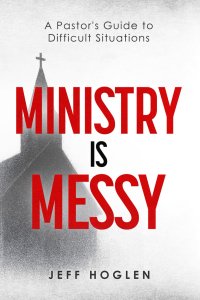
Want more practical strategies for navigating this challenge? Check out “Ministry is Messy: A Pastor’s Guide to Difficult Situations” – available April 18th. Chapter 5 goes deeper into resistance to necessary change, with specific action steps for leading your church through the transitions that matter most.
Because at the end of the day, faithful leadership sometimes means being the one willing to initiate the necessary change others are afraid to face.
 Jeff Hoglen is the author of Ministry is Messy and Church Planting Done Different and has been planting and coaching churches for over two decades. He serves as CEO of churchplanting.com and leads RockFish Church in the Philippines.